

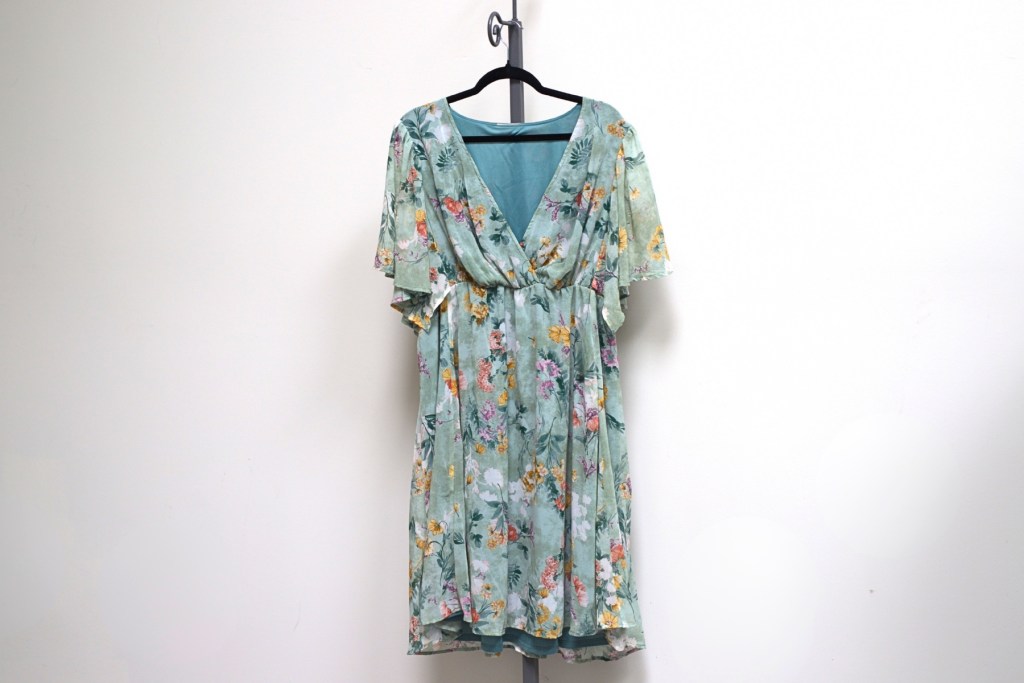
It was 1996, and I was in my senior year at USC studying entrepreneurship. Around that time, I remember complimenting a friend on a really cute dress. She was curvy, confident and stylish, and as she was hanging the dress up, I happened to notice something unusual…
There was no label.
I asked her where she got it. “My mom made it,” she told me. That caught my attention. Not because her mom made clothes, but because of why she had made it. My friend explained that she had a hard time finding cute clothes in her size.
I remember thinking, Really? Here was a woman my own age who knew what she liked and wanted to look great, yet something as basic as finding a dress she loved wasn’t easy for her. It was a small moment, but it stuck with me.
And the timing couldn’t have been more interesting. That semester, I had to create a business plan for my entrepreneurship program. I will always remember my professor telling us something along the lines of:
“You’re going to spend five months on this project. You might as well find a true need in the market where you can make a difference.”
I loved that thought. Make a difference. I just hadn’t figured out the how, the what or the who for yet. And suddenly, something had popped up right in front of me.
Was she the only one?
I became curious. Was this just my friend’s experience? Or were there more curvy women who simply didn’t have the same clothing choices as everyone else? I wanted to understand whether there was a real need in the market – not just assume there was one because of a single conversation.
Now, remember: this was 1996. Today, I could open my laptop, Google the market, pull industry reports, read hundreds of customer comments and probably ask AI to summarize the whole thing before lunch. Back then? Not so much. Google as we know it wasn’t even an option yet.
So I did what you did when you wanted answers in 1996.
I went to the library.
Specifically, USC’s beautiful Doheny Library. And down in the basement, I started searching through articles on microfiche (1996’s version of scrolling).
I searched for anything I could find that mentioned “plus size.” And honestly, there wasn’t much. That alone made me even more curious.
Then I found a statistic that really stopped me: more than 60% of women in the U.S. wore a size 14 or larger.

Wait. If the majority of women wore these sizes, why was it so difficult to find stylish clothing for them? Why weren’t more designers interested in serving this customer? And if we were talking about the majority of women, was this even a niche market?
The numbers just didn’t make sense to me. The research was telling me there were millions of women who needed these sizes. But what I was seeing in stores seemed to tell a completely different story.
Clearly, I was missing something. And microfiche could only give me part of the answer.
I needed to ask the women themselves.
So I did what seemed like the logical next step. I grabbed a clipboard, headed to the mall and started talking to customers.
Two hundred women, to be exact.
I wanted to know where they shopped, where they wanted to shop – and whether what I had seen with my friend was happening to women everywhere.
Their answers surprised me.
Next week: We Asked 200 Women. Their Answers Changed Everything.
Can you guess which store in the mall our founder stood outside of with that clipboard to interview 200 women?
Spoiler: Where they shopped and where they wanted to shop were two very different answers.